For nearly a century, LEGO has understood something many brands spend decades trying to articulate. Play is not disposable. It is a language. When Ole Kirk Christiansen began crafting wooden toys in Denmark in the 1930s, the ambition was modest but the philosophy was rigorous. Make something well. Make it last. Let imagination do the rest. That thinking carried forward into the postwar invention of the interlocking brick, and later into the idea that would quietly shape childhoods across continents: LEGO.
The LEGO brick has always been more than a toy. It is a cultural object. A design icon. A lesson in modular thinking that mirrors architecture and engineering. Its power lies in repetition and possibility. One brick is nothing. Two are a suggestion. A thousand become a city, a starship, or a private universe built on a bedroom floor. The genius was never the shape alone, but what can be built by stacking it.
The brick’s cultural reach expanded steadily. It taught generations how systems work, how structure emerges from repetition, and how imagination thrives. By the time minifigures appeared, LEGO had moved beyond abstraction and into storytelling. Characters brought emotion and narrative into the mix. Later, collaborations with major franchises pulled LEGO deeper into popular culture, turning the brand into a bridge between childhood play and global entertainment.
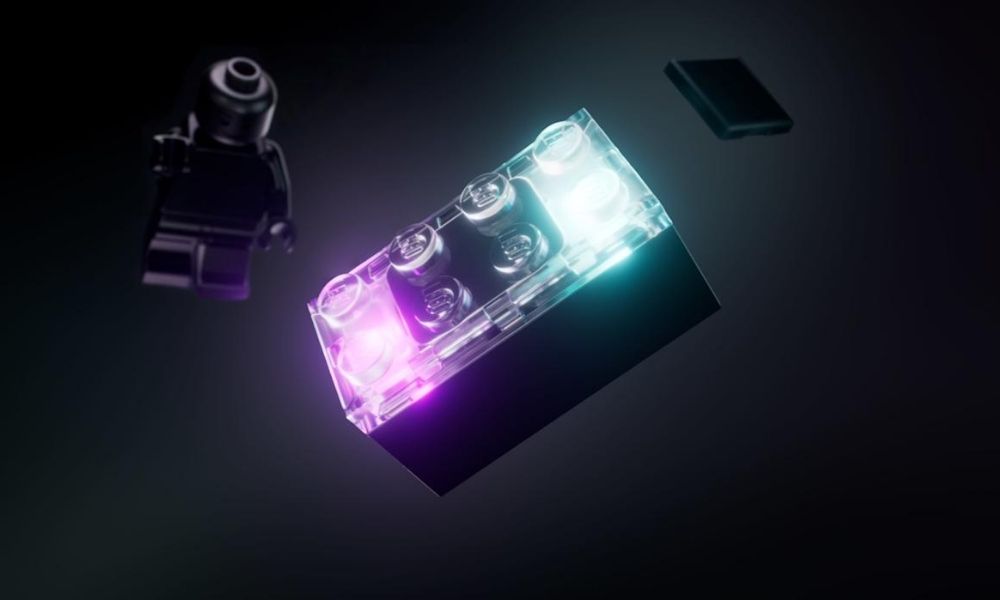
It is within this long arc that LEGO’s latest announcement sits. Unveiled at CES 2026, the new LEGO Smart Play system introduces intelligence directly into the brick itself. Not as an accessory or a screen-based add-on, but as a fully integrated element of physical play.
At the center of the system is a standard 2×4 brick that contains a miniature computer. It responds to movement, orientation, color, proximity, and sound, producing reactions through light and audio. Flip it, tap it, collide with it, or connect it to another element, and it responds instantly. The brick does not dictate outcomes. It reacts to what is physically happening around it.
The system operates through three components. The Smart Brick processes input and delivers feedback. Smart Tags assign identity to objects, allowing the brick to behave differently depending on what it is attached to. Smart Minifigures carry encoded personalities, triggering distinct moods and reactions during play. Together, these elements allow stories to form dynamically. A character’s response changes based on action, not instruction.
What stands out is LEGO’s clear positioning of this as screen-free technology. There are no displays guiding the experience and no cameras interpreting behavior. Sound acts as an input rather than recorded data. Motion replaces menus. The technology exists to heighten physical interaction, not to replace it. Children remain in control of pace, direction, and outcome.
From a design perspective, the decision to keep the Smart Brick the same size and shape as a traditional brick is critical. It integrates seamlessly with existing collections, protecting the long-standing promise that LEGO pieces remain relevant across decades. Wireless charging and long battery life reinforce that idea of continuity, ensuring the brick does not become obsolete after a few years of use.
The Smart Play system will debut through LEGO’s Star Wars sets, developed in collaboration with Disney. These early releases come at a higher price point than standard builds, reflecting both the embedded technology and the licensed universe. It positions the system as a premium layer within LEGO’s ecosystem rather than a replacement for traditional sets.
The smart brick does not transform play into a game with objectives or scores. It remains reactive, not directive. If ignored, it does nothing. If engaged, it enhances what is already happening.
The Smart Brick reflects a shift in how play is evolving. Children today move fluidly between physical and digital worlds. LEGO’s response is not to compete with screens, but to embed responsiveness into the physical object itself. The result is play that feels alive without becoming mediated.
After decades of shaping how people build, imagine, and tell stories, LEGO’s smart brick feels less like a departure and more like a continuation of its core idea. The brick still matters. The hands still matter. What has changed is that the brick now answers back.
ALSO READ: MELANIA TRUMP IS READY TO TELL HER STORY AND SHE’S DOING IT WITH A FILM.