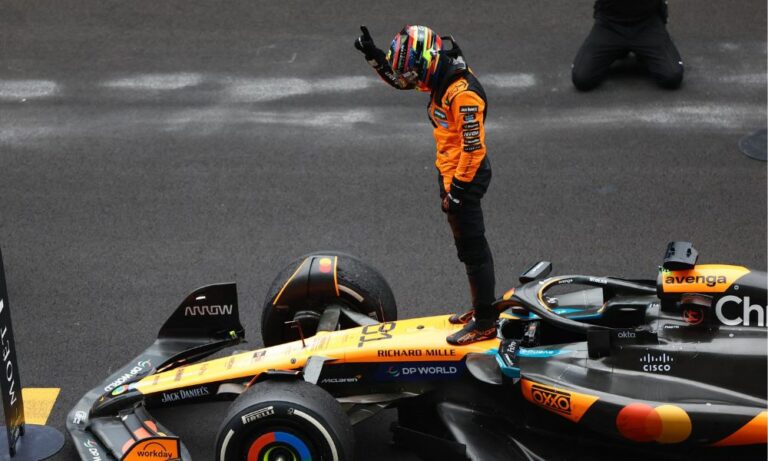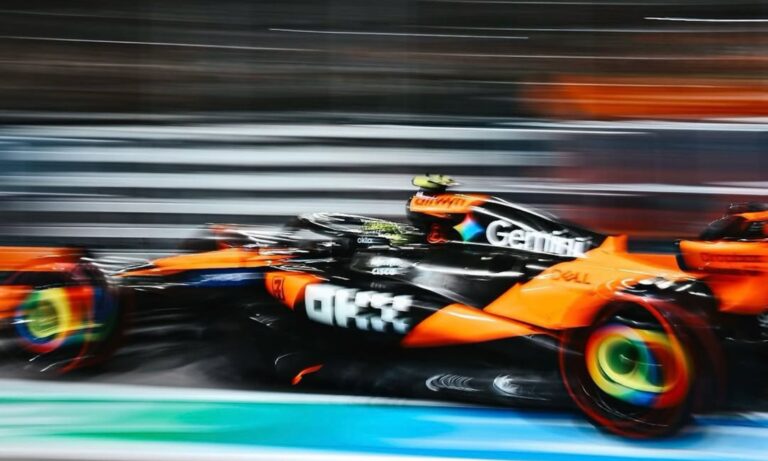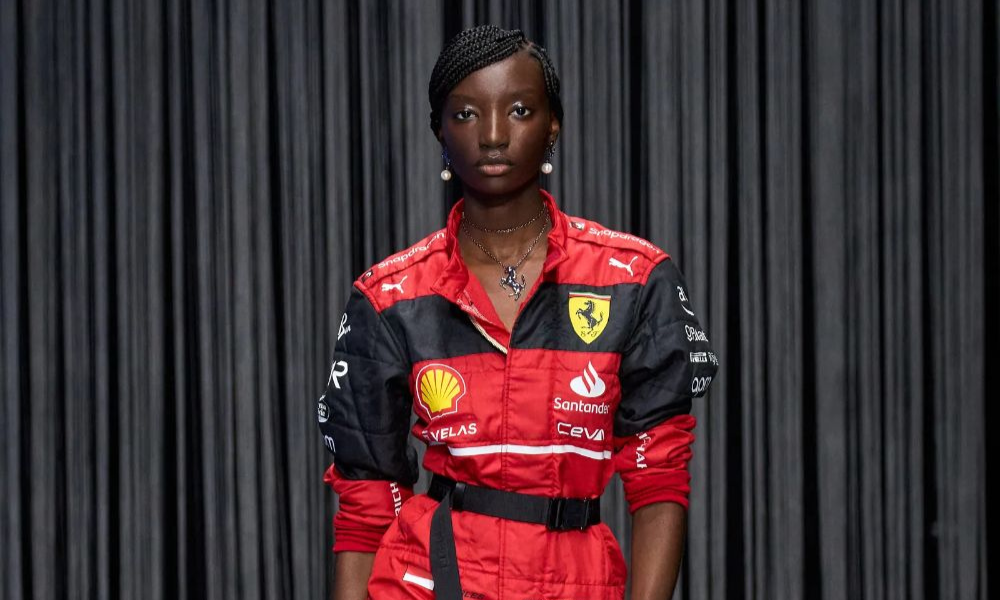
Recent Abu Dhabi Grand Prix has shown that Formula 1 isn’t just a sport—it’s more like fashion week with lap times. It’s Louis Vuitton suitcases rolling into the paddock, TAG Heuer on the wrist, Tommy Hilfiger on the grid, and half of your TikTok “For You” page filled with Lando memes and Charles Leclerc thirst edits.
But this story didn’t begin with private jets and Brad Pitt on the starting grid. It began with something much simpler (and much scarier and more violent): open fields, front-engined cars, minimal safety, and a royal audience on a windy British airfield.
How it started: A gladiator sport for the brave and the wealthy
The very first World Championship Grand Prix took place at Silverstone on 13 May 1950. Giuseppe “Nino” Farina crossed the line in an Alfa Romeo, unknowingly kicking off a global phenomenon, though no one would have guessed it at the time. Early Formula 1 was nothing like today’s polished, hyper-engineered spectacle. Drivers wore minimal safety gear, seatbelts weren’t mandatory, and fuel tanks were thin aluminium shells resting inches from their bodies. The sport was terrifying. Fatalities were frequent, and anyone stepping into a cockpit knew exactly what they were risking.
In the 1950s and 60s, the audience was a peculiar mix of wealthy thrill-seekers and hyper-enthusiastic local fans. Many races were held on disused airfields or on frighteningly narrow public roads. Royalty would appear casually in the paddock, especially in Monaco and Silverstone, lending the sport an air of old-world aristocratic glam. But F1 was still niche, inaccessible to the masses, and very much the arena of the brave, the fascinated, and the fearless. The glamour was there, but it was a very different kind, rooted in danger rather than aesthetics.
As the decades passed, new personalities changed the nature of fandom. The rivalry between James Hunt and Niki Lauda was so intense, complex, and cinematic that it later inspired the 2013 film Rush. Countries like Britain, Italy, and Brazil developed enormous loyal fanbases as their national heroes began appearing on podiums. Yet even then, F1 was primarily a sport for motorsport devotees, not the cultural juggernaut we now know.
Everything shifted when the world met Michael Schumacher.
Schumacher: The moment F1 becomes mainstream
The 1990s and early 2000s were dominated by one man and one team: Michael Schumacher and Ferrari. Schumacher wasn’t just winning, he was redefining what dominance looked like. His run from 2000 to 2004 was borderline mythical. Ferrari’s iconic red livery, paired with Schumacher’s precision and charisma, created the “Schumacher Effect,” a boom in global popularity that pulled millions of casual viewers into the sport.
Schumacher was the prototype of today’s pop-star driver: a blend of technical brilliance, celebrity status, emotional storytelling, and brand power. The sport began expanding rapidly into Asia and the Americas. Television deals grew exponentially, sponsorships multiplied, and suddenly F1 wasn’t just a race, it was a multi-billion-dollar global property. You could feel that something was shifting, that F1 was stepping out of its niche and into the cultural spotlight.
The Middle East enters: Welcome to the era of spectacle
Formula 1’s arrival in the Middle East began in 2004 with Bahrain’s inaugural Grand Prix, a landmark moment that signaled the sport’s global ambitions. Five years later, Abu Dhabi debuted the Yas Marina Circuit, and that changed everything. The world had never seen a race track like it, beautiful views, luxurious yachts, a true ‘old money’ lifestyle.
Eventually, Saudi Arabia and Qatar followed, collectively cementing the Gulf as F1’s luxury playground. The region gave Formula 1 three things it had always lacked: perfect prime-time lighting for global broadcasting, an architected environment designed for content and entertainment, and cutting-edge facilities that elevated the entire idea of what a Grand Prix weekend could look like.
It wasn’t just a race anymore. It was a show.
Drive to Survive: The cultural turbocharge
When Liberty Media bought Formula 1 in 2017, they saw a storytelling opportunity. They understood that F1’s characters, the confident, the chaotic, the charming, the cutthroat, were just waiting to be introduced to a broader audience. Netflix did the rest.
Drive to Survive debuted in 2019 and immediately reframed Formula 1 as a human drama. It turned team principals into protagonists, rookies into underdogs, and mid-grid battles into heart-racing sagas. Suddenly, millions of new viewers around the world had emotional stakes. They cared about Daniel Ricciardo’s smile, Guenther Steiner’s outbursts, Kevin Magnussen’s comeback, team politics, rivalries, heartbreaks, and redemption arcs.
The impact was explosive. For the first time, F1 had mass cultural appeal, not as a technical sport, but as an ensemble drama. Attendance soared. Television viewership doubled in certain markets. Entirely new demographics joined the fanbase. The sport became younger, more diverse, more international, and significantly more internet-native. With emotional investment came a new kind of fandom, one that cared as much about off-track personas as about race results.
Drivers become pop culture icons
After Netflix, drivers were no longer faceless athletes wearing helmets. They became characters in a global narrative. Lewis Hamilton evolved into a fashion icon whose paddock appearances resemble red-carpet moments. Charles Leclerc became the internet’s favourite “soft boy” with a piano habit. Lando Norris built a massive Twitch community. Sergio Pérez became a national hero. George Russell became the immaculate, polite protagonist of British F1 Twitter.
They didn’t just race. They became celebrities of an ultra-aesthetic world. Fashion houses noticed. Luxury brands noticed. Social media noticed. And within a few seasons, F1 had fully crossed over into lifestyle culture.
The paddock became a catwalk. The garage became a backstage area. The grid became the most photographed runway in sports. And then, Hollywood arrived.
F1: The Movie, the final step into cultural mythology
The 2025 blockbuster F1, starring Brad Pitt and Damson Idris, directed by Joseph Kosinski, and produced with unprecedented access to the sport, sealed Formula 1’s place in global culture.
The motion picture was shot during real races across Silverstone, Monza, Spa, Las Vegas, and, crucially, Abu Dhabi. The production team built custom cars to film intense driver POV sequences at actual speeds. They embedded the fictional APXGP team into real race weekends, blending actors into the world of actual teams, mechanics, and fans.
Abu Dhabi became one of the film’s visual anchors, with scenes shot at Yas Marina Circuit, Zayed International Airport, and twofour54 Studios, including major moments captured live during the 2024 Abu Dhabi Grand Prix. The sound, the visuals, the atmosphere, everything was true to life.
Lewis Hamilton served as an executive producer and creative consultant, ensuring the racing culture, driver rituals, and emotional tone were authentic. His involvement grounded the film in genuine F1 culture while letting Hollywood amplify everything that already made the sport exciting.
The cultural spillover was immediate. Collaborations with Tommy Hilfiger, soundtrack features from Rosé, Hans Zimmer, and Doja Cat, limited-edition merchandise, and global marketing campaigns turned the film into a lifestyle event rather than just a movie. It made F1 feel glamorous not only on-screen but in everyday fashion, music, and design.
So… Why is everyone obsessed with Formula 1 in 2025?
The answer is that Formula 1 finally became the perfect hybrid of sport and fantasy.
It still offers the pure adrenaline of racing at 300 km/h, the technical brilliance of engineering, and the emotional weight of rivalries and triumphs. But now it also offers the aesthetics of high fashion, the drama of prestige television, the intimacy of social media, the glamour of global tourism, the storytelling of cinema, and the sense of belonging that modern fan communities crave.
What was once reserved for royals and motorsport insiders is now accessible to anyone, through Netflix, TikTok, Instagram, cinema, and a global network of content creators. You can experience the glamour without setting foot in the paddock. Or you can go all in, buy a ticket, dress up, and walk through Yas Marina like you somehow belong there.
Formula 1 has become an elite world that feels welcoming, a global spectacle that feels personal, and a high-speed sport that feels human.
And that is exactly how Formula 1, the once-niche, once-terrifying, once-exclusive arena—became the coolest show on Earth.
ALSO READ: OBSESSED THIS WEEK: OUR EDITOR’S BRAND CRUSH IS AIMÉE MOREAU.